Space Exploration Month
October is Space Month! Join us as we connect with some astronauts, scientists and engineers who are exploring our planet, solar system and beyond!
Space Exploration Story map: https://storymaps.arcgis.com/stories/e070238c320a4da68cb29e4c9f104fee
Video Kahoot Lessons: https://create.kahoot.it/course/2cb0e3d1-68eb-456d-889a-6d4a633d92e3
With Support From

October 1st @ 12:00pm eastern
Join astronomy educator and long time friend of EBTSOYP Trevor Kjorlien (Plateau Astro) as he shares the story of Canadian Astronaut Josh Kutryk’s upcoming mission to the International Space Station! Trevor joined us last year many times around Jeremy Hansen’s Artemis II mission and will be exploring the nitty gritty of Canada’s return to space in 2026!
October 1st @ 1:00pm eastern
Dr. Abigail Fraeman is the deputy project scientist for the Curiosity Mars rover and research scientist at NASA’s Jet Propulsion Laboratory in Pasadena, California. Her research focuses on understanding the origin and evolution rocky bodies across our solar system. In addition to Curiosity, Abigail has worked on the Spirit and Opportunity Mars rover and Mars Reconnaissance Orbiter missions, and she is also involved in developing new instruments and mission concepts for to explore our solar system in the future.
October 8th @ 11:00am eastern
Join astronomy educator and long time friend of EBTSOYP Trevor Kjorlien (Plateau Astro) as he shares the story of Canadian Astronaut Josh Kutryk’s upcoming mission to the International Space Station! Trevor joined us last year many times around Jeremy Hansen’s Artemis II mission and will be exploring the nitty gritty of Canada’s return to space in 2026!
October 8th @ 12:30pm eastern
Linda Welzenbach is a planetary scientist and science writer at Rice University. In her former life as Meteorite Collections Manager at the Smithsonian’s National Museum of Natural History, she collected and classified thousands of meteorites from Antarctica. From two deployments to the ‘Ice’, she will share what it’s like to explore and live in places that few, if any, humans have ever been. She will explain why anyone would endure such hardships in service to the science and what these puzzling relicts from the birth of our solar system tell us about the origin of Earth, the Moon, Mars and more!
October 14th @ 1:00pm eastern
The Curiosity Mars rover has been exploring Gale crater for over thirteen years, piecing together the history of Mars and its potential to support life, if it ever existed. Curiosity’s science team has determined that Mars once had all the conditions necessary to support life: it was a habitable planet. Dr. Vasavada is the lead scientist on the mission and will discuss these discoveries as well as the challenges of robotic exploration of another planet.
October 15th @ 11:00am eastern
Nathalie is an astrophysicist and a science communication enthusiast. She is the coordinator of the Institute for Research on Exoplanets at the Université de Montréal and a Canadian science communicator for the James Webb Space Telescope. In this talk, discover the successful launch and early discoveries of the most powerful new tool at our disposal for exploring the universe!
October 15th @ 12:00pm eastern
Nathalie est une astrophysicienne et une passionnée de communication scientifique. Elle est coordonnatrice de l’Institut de recherche sur les exoplanètes de l’Université de Montréal et communicatrice scientifique canadienne pour le télescope spatial James Webb. Dans cette conférence, découvrez le lancement réussi et les premières découvertes du nouvel outil le plus puissant dont nous disposons pour explorer l’univers !

October 19th @ 12:30pm eastern
The Nancy Grace Roman Space Telescope launched into space on August 30! NASA’s next flagship observatory, the Roman Space Telescope will see the universe at the same resolution but over 100 times wider than the Hubble Space Telescope. The Roman Public Outreach Lead, Peter Sooy, will give a talk about the build, launch, and science of the Roman Space Telescope.

October 20th @ 12:30pm eastern
Join Caitlin Crawford, systems engineer at NASA’s fabled Jet Propulsion Laboratory for this special program where you can ask her ANYTHING! Veteran of several iconic space exploration missions including Europa Clipper, and a fan favourite at EBTSOYP, let your imagination run wild in this show that is 99% Q and A. Want to know the nitty gritty of building space robots? How expensive space missions are? How about if there could be life elsewhere in the universe? You name it, Caitlin’s got you covered!

October 21st @ 11:00am eastern
Celebrated NASA astronaut, pilot of the space shuttle Endeavour, and crew member on the Russian Soyuz spacecraft, Terry Virts also spent 200 consecutive days in space as commander of the International Space Station—one of the longest continuous space missions of any NASA astronaut. Step back, more than 220 miles from Earth, and experience our planet from a new perspective. Terry helped to install the outpost’s 360-degree observation module, which not only helped him to take more photos than any astronaut before him, but gives those who see the images a deeper understanding of our planet’s beauty, climate, and place in the universe.

October 21st @ 12:00pm eastern
Kelsey is the Science Lead for NASA Artemis II Lunar Mission. She investigates the science questions, tools and instruments, and operational concepts for the exploration of other planetary surfaces. As the lead for NASA’s lunar science objectives for the Artemis 2 mission, including observations and photography of the Moon and the Earth. She is on the leadership team for geoscience training for NASA astronauts, where she develops and delivers both classroom and field training, as well as serves as the Field Lead for several of NASA’s science field training sites.

October 22nd @ 12:30pm eastern
Aaron is a Mechanical Engineer at NASA Jet Propulsion Laboratory. He designs, builds, and tests robotic systems to acquire samples of rocks and soil from other planets so that we can study them for science. He has had roles on the Mars Science Laboratory Rover Mission and the InSight Mars Lander. He was part of the team that developed the drill bits that were used on the Mars 2020 Rover. Aaron is Navajo, originally from a small town near the border of the Navajo Nation. He is passionate about spreading the excitement of STEM to students from his home community and across the nation.

October 23rd @ 9:00am eastern
Join astronomer and National Geographic Explorer Munazza Alam to explore beyond our Solar System! In the past two decades, we have discovered thousands of planets outside of the Solar System, many of which are nothing like our own. With the recently launched James Webb Space Telescope, we are at the onset of a revolution in our understanding of exoplanets as we begin to measure the atmospheres of planets ranging from large Jupiter-like worlds to smaller Earth-like planets elsewhere in the universe. These efforts bring us closer to answering one of the oldest questions humanity has ever posed to the Cosmos: “are we alone?”

October 26th @ 9:00am eastern
Amy Williams is an astrobiologist and geologist, and a professor at the University of Florida. She is a science team member on both of the active NASA Mars rover missions, Curiosity and Perseverance. In this talk we will explore the major discoveries of these missions and what is ahead in Mars exploration.

October 28th @ 11:00am eastern
What happens when you try to build several groundbreaking spacecraft at the same time, and get them ready on a tight timeline? Join JPL engineer Ravi Prakash to explore 4 new missions launching in 2028, and discover how JPL is changing the way we tackle big engineering challenges to make them possible. Ravi Prakash has been at JPL since 2005 and was part of the team that landed the Curiosity rover on Mars. After taking a break to design products that fight poverty, he returned to JPL to lead operations for the InSight lander on Mars, helped integrate the science instruments for the Psyche mission to an asteroid, and now works on the VERITAS mission to explore Venus. Ravi spends all his free time trying desperately to make his wife and two daughters laugh.
Last Year's Lessons
Join Josh to explore his career path, and his ongoing training for his mission to the International Space Station!!!
Joshua Kutryk is an experimental test pilot with over 4,000 hours of flying experience on more than 40 aircraft types. Prior to joining the Canadian Space Agency (CSA), Col Kutryk flew as a developmental pilot for the Royal Canadian Air Force in Cold Lake, Alberta. He has worked on a variety of flight test projects, including out-of-control flying, simulator certification, automated navigation and weapon guidance development. Previously, Col Kutryk served as a CF-18 fighter pilot, flying missions in support of NATO, UN and NORAD commitments around the world. He has been deployed to both Libya and Afghanistan.
Joshua Kutryk was selected as an astronaut candidate by the CSA in July 2017. He completed the two-year Astronaut Candidate Training Program and obtained the official title of astronaut in January 2020. Since then, he has continued to serve Canada’s space program as an active astronaut at NASA. He works in different technical and operational positions, including from Mission Control as a capcom during spacewalks and commercial vehicle proximity operations. In 2023, he was assigned to a mission to the International Space Station, where he will live and work for approximately six months.
Ravi Prakash returns to EBTSOYP with a fascinating talk on how Artificial Intelligence is redefining the boundaries of space exploration. Ravi will guide us through why space exploration is essential for humanity, how AI is revolutionizing our ability to explore space, and thepotential that AI has to reimagine space exploration.
Ravi has been at JPL since 2005 and was part of the team that landed the Curiosity rover on Mars. After taking a break to design products that fight poverty, he returned to JPL to lead operations for the InSight lander on Mars, helped integrate the science instruments for the Psyche mission to an asteroid, and now works on the VERITAS mission to explore Venus. Ravi spends all his free time trying desperately to make his wife and two daughters laugh.
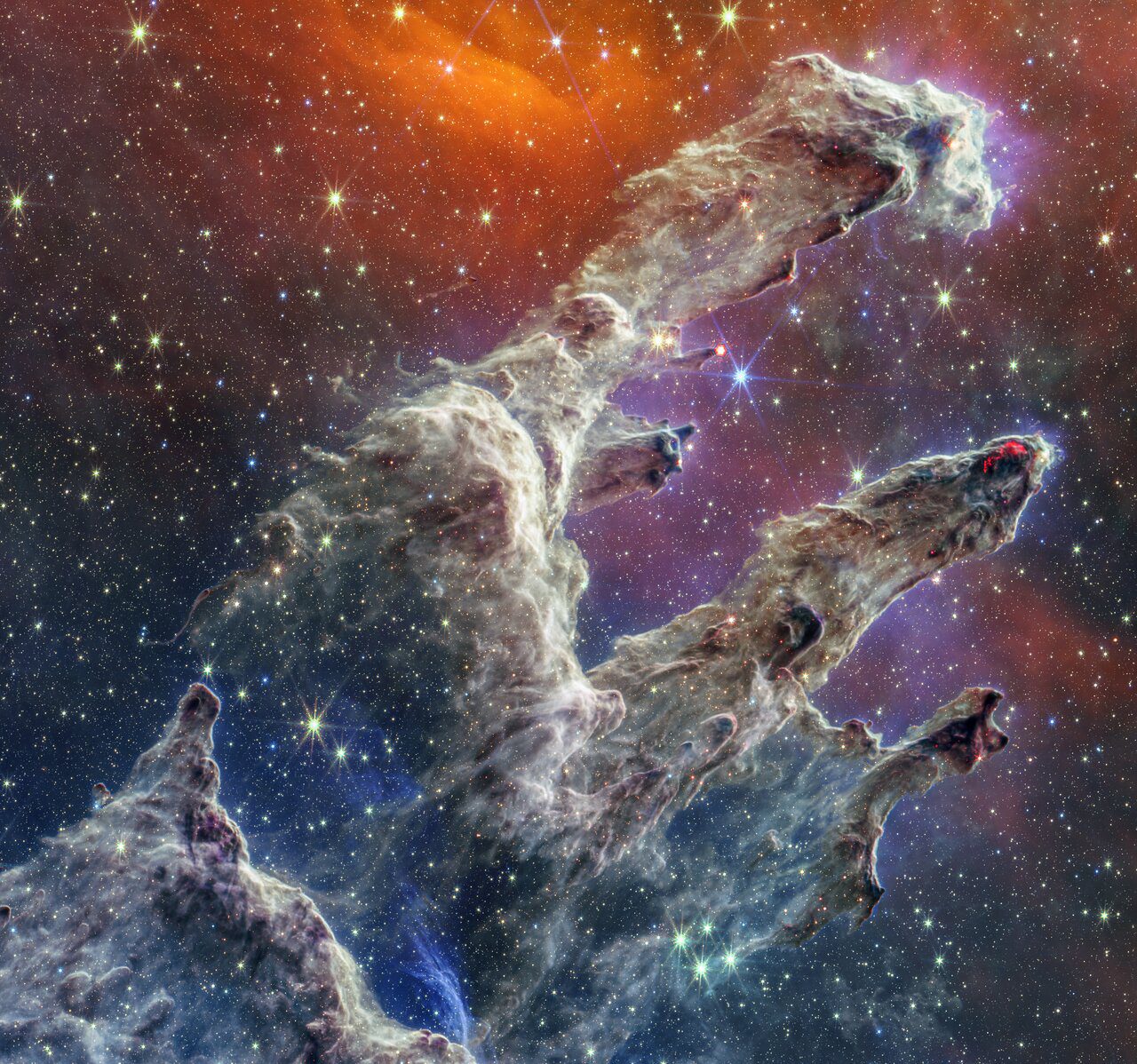
The James Webb Space Telescope, launched in December 2021, has been blowing our minds with beautiful images and incredible discoveries for over 3 years already! Thanks to Webb, we now have the capacity to see farther than ever in our Universe, peer through the cosmic dust sprinkled throughout galaxies, and discover and study new alien worlds. Find out all about how this amazing space telescope, a collaboration between NASA, the European Space Agency and the Canadian Space Agency, is unveiling cosmic wonders using infrared light.
Nathalie Nguyen-Quoc Ouellette is an astrophysicist, science communicator and lifetime lover of all things space! She obtained her Ph.D. in Physics & Astronomy at Queen’s University in Kingston, Ontario in 2016. Her research focuses on galaxy formation and evolution, particularly those found in clusters. Nathalie is currently the Deputy Director of the Trottier Institute for Research on Exoplanets (iREx) and the Mont-Mégantic Observatory (OMM) at the University of Montréal and is also the Outreach Scientist for the James Webb Space Telescope in Canada collaborating with the Canadian Space Agency.
The Curiosity Mars rover has been exploring Gale crater for over thirteen years, piecing together the history of Mars and its potential to support life, if it ever existed. Curiosity’s science team has determined that Mars once had all the conditions necessary to support life: it was a habitable planet. Dr. Vasavada is the lead scientist on the mission and will discuss these discoveries as well as the challenges of robotic exploration of another planet.
Stars. Constellations. Milky Way. Greek Mythology. Indigenous stories about the night sky. Have you ever wondered how the northern lights occur? Did you know that Wood Buffalo National Park is the largest Dark Sky Preserve in the world? What does that mean? Explore the beauty of the dark sky and learn about the constellations and the Indigenous Northern stories that make our Northern sky the most fascinating of all.
Le télescope spatial James Webb, lancé en décembre 2021, nous émerveille avec ses magnifiques images et ses découvertes incroyables depuis plus de 3 ans déjà ! Grâce à lui, nous pouvons désormais voir plus loin que jamais dans l’Univers, scruter la poussière cosmique dispersée dans les galaxies et découvrir et étudier de nouveaux mondes extraterrestres. Découvrez comment cet incroyable télescope spatial, fruit d’une collaboration entre la NASA, l’Agence spatiale européenne et l’Agence spatiale canadienne, dévoile des merveilles cosmiques grâce à la lumière infrarouge.
Nathalie Nguyen-Quoc Ouellette est astrophysicienne, communicatrice scientifique et passionnée de l’espace depuis toujours ! Elle a obtenu son doctorat en physique et astronomie à l’Université Queen’s de Kingston, en Ontario, en 2016. Ses recherches portent sur la formation et l’évolution des galaxies, en particulier celles qui se trouvent dans les amas. Nathalie est actuellement directrice adjointe de l’Institut Trottier de recherche sur les exoplanètes (iREx) et de l’Observatoire du Mont-Mégantic (OMM) à l’Université de Montréal et est également scientifique de vulgarisation pour le télescope spatial James Webb au Canada en collaboration avec l’Agence spatiale canadienne.
Rejoignez Josh pour explorer son parcours professionnel et sa formation continue pour sa mission vers la Station spatiale internationale !!!
Joshua Kutryk est un pilote d’essai cumulant plus de 4000 heures de vol sur plus de 40 types d’avion. Avant de se joindre à l’Agence spatiale canadienne (ASC), le Col Kutryk était pilote d’essai pour l’Aviation royale canadienne à Cold Lake, en Alberta. Il a travaillé sur une variété de projets d’essais, par exemple le pilotage hors contrôle, l’homologation de simulateurs, la navigation automatisée et le développement de systèmes de guidage d’armes. Auparavant, comme pilote de CF-18, le Col Kutryk a effectué des missions pour aider l’OTAN, l’ONU et le NORAD à respecter leurs engagements dans le monde entier. Il est allé en mission en Libye et en Afghanistan.
Joshua Kutryk a été sélectionné comme candidat astronaute en juillet 2017 par l’ASC. Après sa formation de base d’astronaute d’une durée de deux ans, il a obtenu en janvier 2020 le titre officiel d’astronaute. Il travaille depuis à la NASA en qualité d’astronaute de l’ASC. Il occupe différents postes techniques et opérationnels, notamment celui d’agent de liaison capcom au centre de contrôle de mission lors de sorties dans l’espace et de manœuvres d’approche de véhicules spatiaux commerciaux. En 2023, il a été affecté à une mission commerciale à la Station spatiale internationale d’une durée d’environ six mois. Il sera le premier astronaute de l’ASC à prendre part à une mission du Programme des missions habitées commerciales de la NASA.
Nicole has explored from the heights of outer space to the depths of our oceans. A veteran NASA Astronaut, her experience includes two spaceflights and 104 days living and working in space on both the Space Shuttle and the International Space Station (ISS). A personal highlight of Nicole’s spaceflight was painting the first watercolor in space.
Nicole is also a NASA Aquanaut, who in preparation for spaceflight and along with her NEEMO9 crew, lived and worked during an 18-day and longest saturation mission to date on the Aquarius undersea habitat.
As an Artist, and now retired from NASA, Nicole combines her artwork and spaceflight experience to inspire creative thinking about solutions to our planetary challenges, to raise awareness of the surprising interplay between science and art, and to promote the amazing work being done every day in space to improve life right here on Earth. She is the founder of the Space for Art Foundation.
Dr. Abigail Fraeman is a research scientist at NASA’s Jet Propulsion Laboratory and the Deputy Project Scientist for the Curiosity Mars Rover. She studies the origin and evolution of rocky bodies in our solar system, and has worked on robotic missions to Mars, the moons of Mars, and Earth’s Moon. In this presentation, she will update students with the latest news from the Curiosity Mars rover, explain how the mission’s findings fit into the broader arc of Mars exploration, and share personal stories about how she became involved in space exploration.
Europa Clipper is on its path to Jupiter to explore the icy moon of Europa. Winston Jackson will discuss the mission one year into cruise, outlining its science goals and how the spacecraft is uniquely equipped to study Europa’s atmosphere, geology, and interior. He will also highlight the team’s latest progress and share key milestones for the rest of the mission.
Winston began his career in systems engineering at JPL in 2014. He has supported missions for civil and national security space applications during his time at JPL, including helping to integrate, verify, and validate the science instruments on the Mars Perseverance Rover. Winston was the lead systems engineer for the Europa Clipper science tour mission phase and has served as a flight director and mission operations systems engineer since the mission’s launch in October 2024. He is currently supporting the VERITAS mission to Venus.
Dr. Caitlin Crawford is a Flight Director and Systems Engineer at NASA JPL for NASA’s Europa Clipper mission, which will explore Jupiter’s moon Europa. This exciting moon may hide a liquid-water ocean beneath its icy shell. She’ll share what it’s like to help fly a spacecraft to another planet and how missions like Europa Clipper bring us closer to answering one of humanity’s biggest questions: could there be life beyond Earth?
Join Adele Luta as she shares what it takes to gear up explorers to explore the most extreme environments on and off the planet! Adele is a scientist and innovator. She holds BS and MS degrees in physics. She has worked at National Aeronautics and Space Administration (NASA) Johnson Space Flight Center as a certified Mission Control Center flight controller and astronaut instructor where she supported over 90 spacewalks. Now she works on teams to help humans explore extreme environments through habitats, vehicles, and spacesuits. Her training as a physicist has allowed her to work in many research fields including researching the mind, nuclear physics, and teamwork. She is a seaplane pilot and volunteer coral restoration SCUBA diver. She loves spending time with her husband and dogs.
Cady Coleman is a retired NASA Astronaut and USAF Colonel who flew twice on the Space Shuttle and spent 159 days aboard the International Space Station. A popular public speaker and media consultant, she is also a regular contributor for space exploration news and a Research Affiliate at MIT’s Media Lab.
Cady’s book, Sharing Space: An Astronaut’s Guide to Mission, Wonder, and Making Change is known for its insights and candid stories. She and her family were featured in PBS’s Space: The Longest Goodbye; and The Wonderful: Stories from the Space Station.
An improvisational flute player, she is known for her “Space Duet” with Jethro Tull’s Ian Anderson and her work with the Irish band, The Chieftains. From space, she coached Sandra Bullock for her role in “Gravity.”
Cady lives in Shelburne Falls, Massachusetts with her husband, glass artist Josh Simpson. They have two adult sons and two enormous Maine Coon cats, Saber and Max.
Scientists have been speculating on Venus as a habitable world for over half a century, not the scorching surface, but the much cooler atmosphere at 48 to 60 km above the surface. The concept is that Venus’ perpetual cloud cover might host life, as Earth’s clouds do. The Venus clouds, however, are not made of water but are composed of concentrated sulfuric acid—an aggressive chemical that kills Earth life.
Professor Seager will describe recent lab-based experiments that advance the notion that the Venus atmosphere environment may be able to support complex chemicals needed for life. She will describe the Morning Star Missions to Venus that aim to find signs of life or life itself in the Venus clouds. Professor Sara Seager is a Canadian-American astrophysicist and Professor of Physics, Planetary Science, and Aeronautics and Astronautics at the Massachusetts Institute of Technology, where she holds the Class of 1941 Professor Chair. Her research ranges from the foundation of exoplanet atmospheres to innovative theories about life on other worlds to development of novel space mission concepts.
Celebrated NASA astronaut, pilot of the space shuttle Endeavour, and crew member on the Russian Soyuz spacecraft, Terry Virts also spent 200 consecutive days in space as commander of the International Space Station—one of the longest continuous space missions of any NASA astronaut. Step back, more than 220 miles from Earth, and experience our planet from a new perspective. Terry helped to install the outpost’s 360-degree observation module, which not only helped him to take more photos than any astronaut before him, but gives those who see the images a deeper understanding of our planet’s beauty, climate, and place in the universe.
Explorer Sarah Bouckoms is a scientist and educator who has worked in Antarctica since 2008. This Antarctic summer, she’s fulfilling a lifelong dream by traveling to the U.S. National Science Foundation-funded IceCube Neutrino Observatory at the Amundsen-Scott South Pole Station in Antarctica to work on the IceCube Upgrade–and she’s taking us with her! From November 2025 through February 2026, Sarah will show us how the IceCube Neutrino Observatory detects neutrinos through a network of over 5,000 individual light sensors that have been installed in the Antarctic ice sheet. What are neutrinos, what can they tell us about the universe, and what’s it like to live and work at the South Pole?
Situated high in the Andes Mountains in Chile, the Observatory uses the largest camera ever built to survey the whole sky to provide an ultra-wide, ultra-high-definition, time-lapse view of our Universe! Join Dr. Alan Strauss, head of education at the new Rubin Observatory as we explore how this remarkable tool will help us understand the cosmos around us for years to come. We’ll dive into some of the science, the technologies and why it’s so special in this first broadcast with the Rubin team.
The launch of Artemis ll is scheduled for the New Year, a huge step in our journey to return to the moon. Four astronauts will travel further from Earth than any human has before, making a loop around the moon. We’re so proud and excited that one of those astronauts, Jeremy Hansen, is Canadian! Exploring by the Seat of Your Pants is proudly hosting a Canadian Space Agency event for Jeremy’s last classroom connection before the launch, you don’t want to miss taking part in this with your students!
Star of Sharknado 3 (not really) and engineer at NASA’s Jet Propulsion Laboratory. Bobak is the Fault Protection lead on the NISAR joint Earth observation mission with India at NASA’s Jet Propulsion Laboratory. His prior positions have included Launch, Cruise, Approach Engineering Lead and Flight Director on Mars Science Laboratory Curiosity, Science Planner on the Cassini mission, Flight Software Product Line System Engineer, and Europa Clipper Mission Planner.
From 2000 to 2003, Jessica worked for Lockheed Martin’s Human Research Facility (NASA Johnson Space Center), supporting human physiology research on the space shuttle and International Space Station. During this time, she also participated in research flights on NASA’s reduced gravity aircraft and served as an aquanaut crew member in the Aquarius underwater habitat for the 4th NASA Extreme Environment Mission Operations (NEEMO) mission.
She was selected in June 2013 as one of eight members of the 21st NASA astronaut class. Her Astronaut Candidate Training included scientific and technical briefings, intensive instruction in International Space Station systems, spacewalks, robotics, physiological training, T38 flight training, and water and wilderness survival training.
Expedition 61 and 62 (September 25, 2019 through April 17, 2020). The crew launched from the Baikonur Cosmodrome aboard the Soyuz spacecraft. During her first spaceflight, she conducted the first three all-woman spacewalks with crewmate Christina Koch of NASA, totaling 21 hours and 44 minutes. The crew contributed to hundreds of experiments in biology, Earth science, human research, physical sciences and technology development. She spent 205 days in space, 3,280 orbits of Earth and a trip of 86.9 million miles.
No upcoming events found.
Donate
Help teachers around the world provide world class STEM materials.
Exploring by the Seat of Your Pants is Free for Classrooms Anywhere