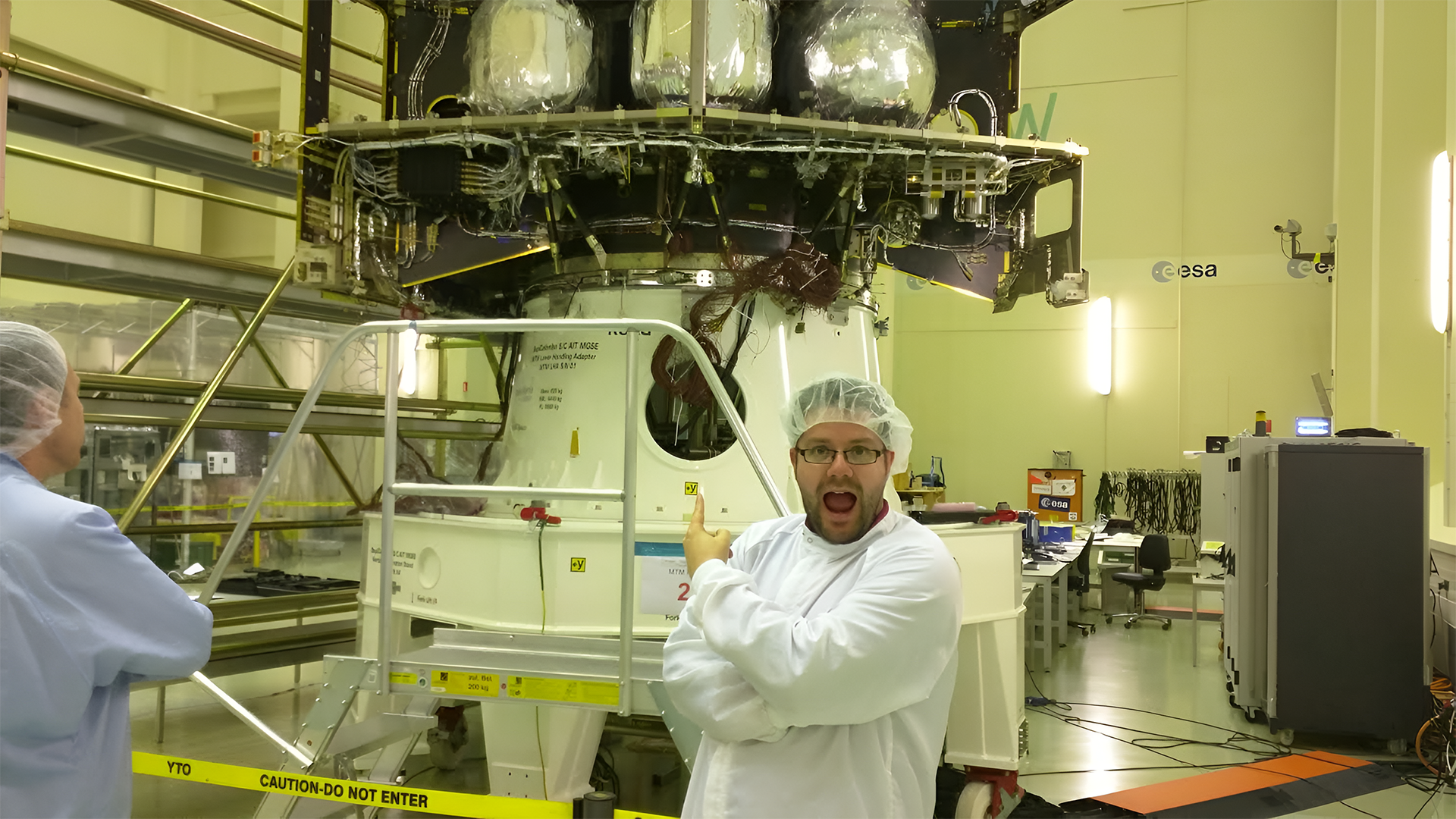
For two years, Paul led a remarkable team of scientists and engineers in the design of a mission to Venus. The mission concewhich is called “Phantom,” features a balloon able to carry instruments and passively float through the Venus clouds on winds for weeks or even months. Why do this? Because we have circumstantial but compelling evidence that, at some point in the past, Venus had oceans just as Earth today. And that, at some point thereafter, Venus underwent a climate catastrophe that ultimately stripped those oceans into space. Could such a fate befall Earth? Was Venus unlucky? Or is it some quirk of fate that Earth hasn’t turned into Venus (yet)?
Paul is a planetary scientist who worked on NASA’s MESSENGER mission, the first to orbit the planet Mercury. His research focuses on comparing and contrasting the surfaces and interiors of planetary bodies, including Earth, to understand why planets look the way they do.