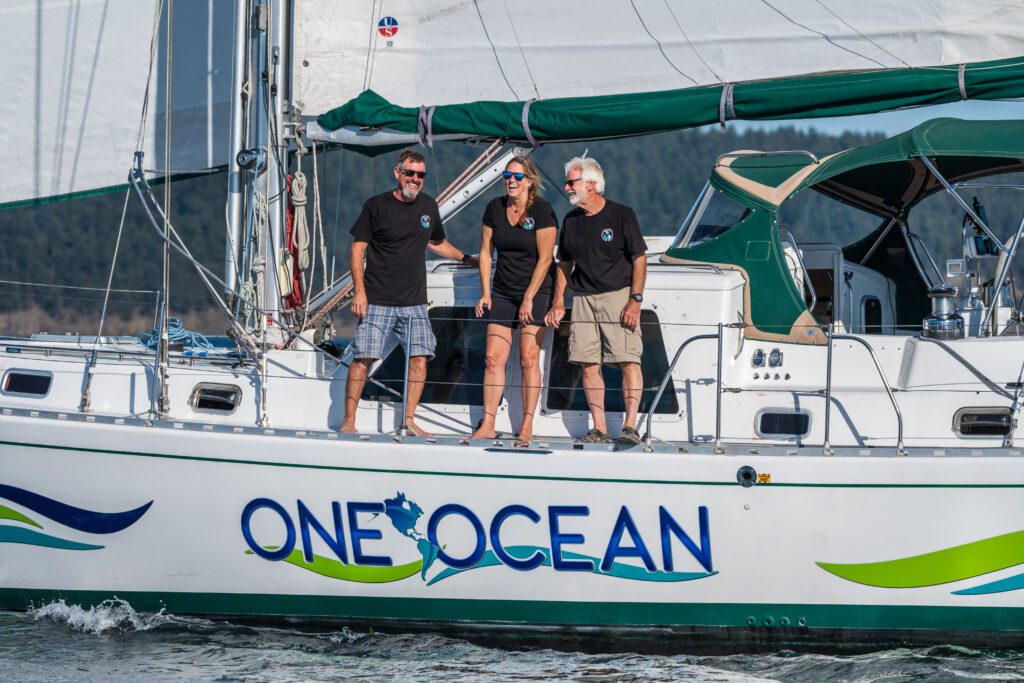
The Around the Americas Expedition is a 14-month voyage, starting in May 2025, that will circumnavigate North and South America aboard the 48-foot sailboat, One Ocean.
The mission focuses on scientific research, education, and community outreach to raise awareness about ocean health. Building on Captain Mark Schrader’s original 2009–2010 journey, the expedition will compare oceanic changes over the past 15 years.
One of the key projects involves researching kelp forests along the coastlines of North and South America, documenting their health and dynamics. Collaborators include the University of Victoria, UCLA, the Woods Hole Oceanographic Institution, and the University of Washington.

Their primary onboard research will be the first-ever comprehensive pole-to-pole study of giant and bull kelp, spanning from Alaska to Patagonia—a continuous 27,000 nautical miles of open-source research. The expedition’s route will overlap approximately 40 kelp forest sites selected from satellite imagery. They’ll will investigate the distribution, health, density, and environmental conditions affecting kelp ecosystems in regions where they are known to thrive.
The expedition will also conduct supporting research with atmospheric and oceanographic instrumentation on board. The crew will deploy SWIFT buoys to collect wave and ocean/atmospheric data for researchers, ocean enthusiasts and school students to follow.
All research will be open sourced and shared on a constant stream through our social media sites and YouTube educational videos (#OneIslandOneOcean). Our education platform partner is Exploring By The Seat Of Your Pants. Exploring by the Seat of Your Pants opens the frontlines of our changing planet to all students through the passion, immersive technology and visual storytelling of the scientists, explorers, conservationists, and adventurers who are smashing the boundaries of what we thought was possible. Our journey and education videos will be free for classrooms everywhere.
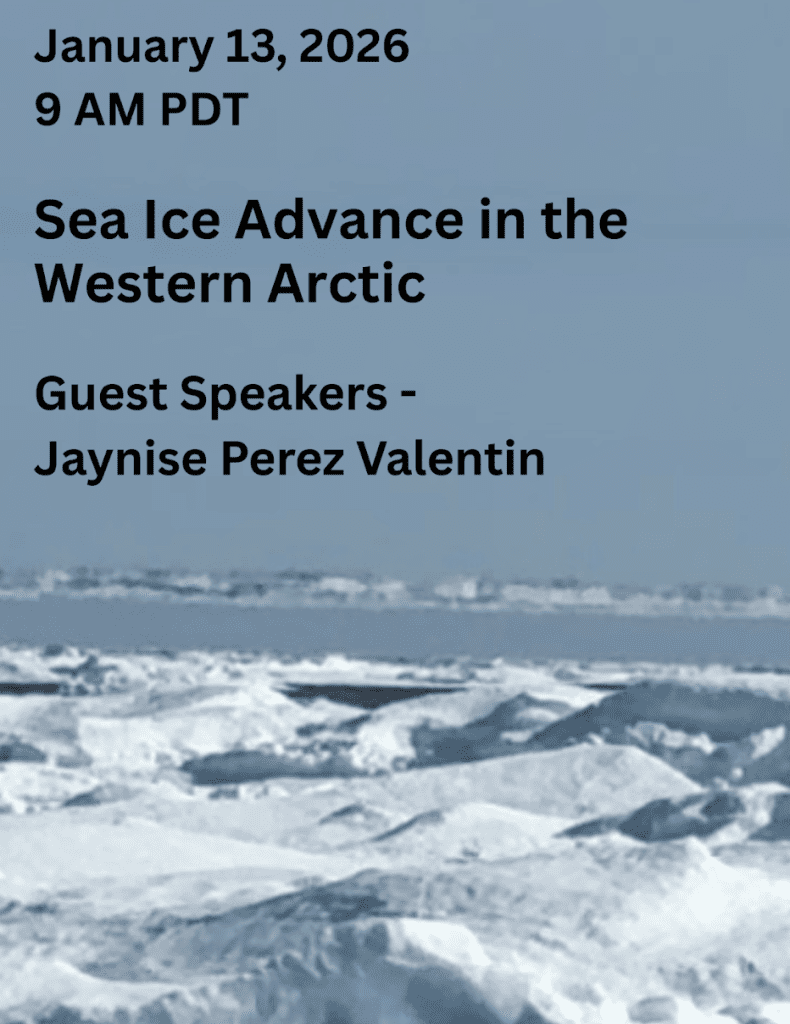
Dr. Perez Valentin from the Applied Physics Lab at the University of Washington, will discuss the importance of the sea ice advance in the western arctic. As our planet warms, progressively less sea ice survives the summer, resulting in thinner winter ice packs. This creates a positive feedback increasing heat fluxes from ocean to atmosphere which can affect sea ice advance over the winter. As the planet gets warmer, these things are changing fast.
The Around the Americas Expedition is a 14-month voyage, that just launched in May. They will circumnavigate North and South America aboard the 48-foot sailboat, One Ocean. The mission focuses on scientific research, education, and community outreach to raise awareness about ocean health. Building on Captain Mark Schrader’s original 2009–2010 journey, the expedition will compare oceanic changes over the past 15 years.
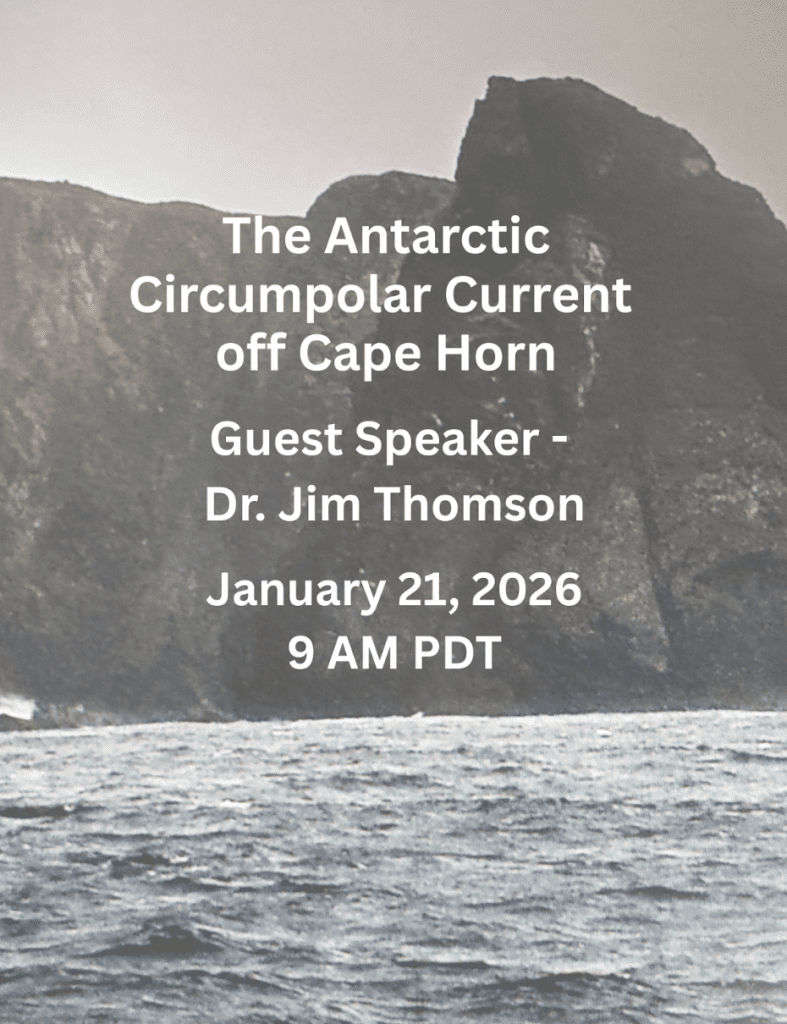
Dr. Thomson studies waves and turbulence at the ocean surface, including interactions with sea ice at the University of Washington’s Applied Physics Lab. He will explore the torrent waters of the Cape Horn region and Drake Passage called the Antarctic Circumpolar Current.
The fast water swirls in a series of fronts that delineate the warmer waters near Chile with the cold waters by the Antarctic Peninsula. These fronts cause changes in the winds and waves that arrive from the nearly infinite fetch of the mighty Southern Ocean.
The Around the Americas Expedition is a 14-month voyage, that just launched in May. They will circumnavigate North and South America aboard the 48-foot sailboat, One Ocean. The mission focuses on scientific research, education, and community outreach to raise awareness about ocean health. Building on Captain Mark Schrader’s original 2009–2010 journey, the expedition will compare oceanic changes over the past 15 years.
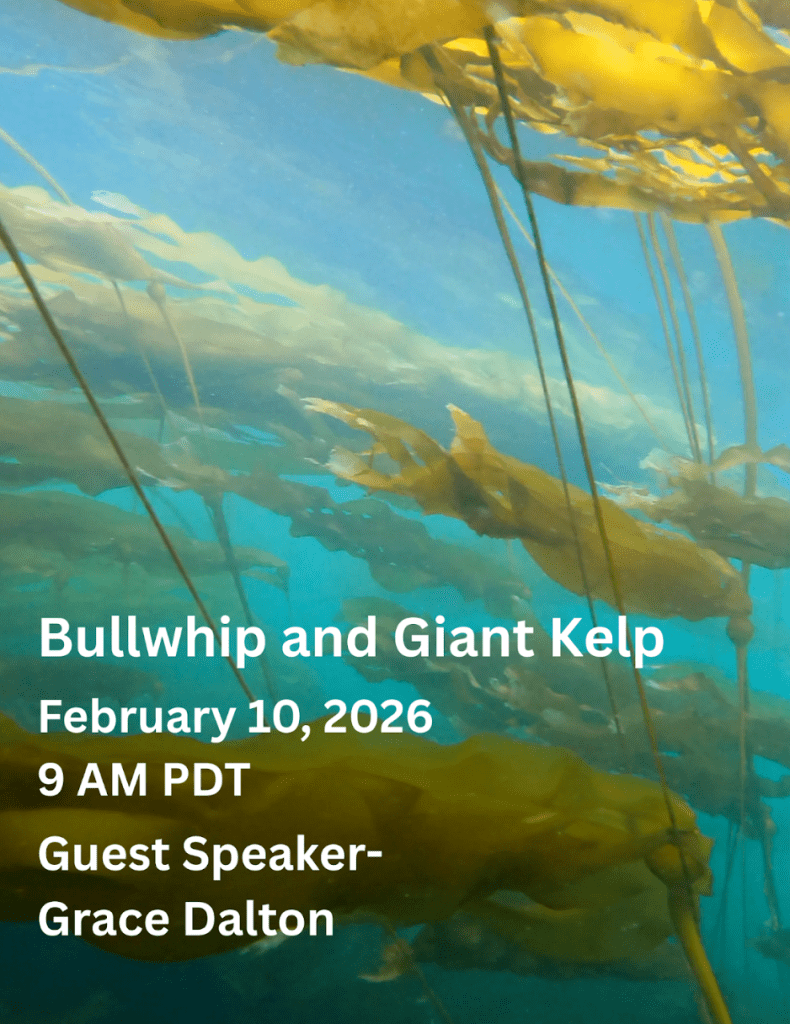
Kelp forests are among Earth’s most dynamic and productive marine ecosystems, created by giant kelp (Macrocystis pyrifera) and bull kelp (Nereocystis luetkeana). They are also integral to the marine carbon cycle, boasting primary production rates comparable to those of tropical rainforests. Beyond their ecological importance, kelp forests hold cultural significance for Indigenous communities along the Pacific coast and contribute to commercial industries and scientific research.
The Around the Americas Expedition is a 14-month voyage, that just launched in May. They will circumnavigate North and South America aboard the 48-foot sailboat, One Ocean. The mission focuses on scientific research, education, and community outreach to raise awareness about ocean health. Building on Captain Mark Schrader’s original 2009–2010 journey, the expedition will compare oceanic changes over the past 15 years.
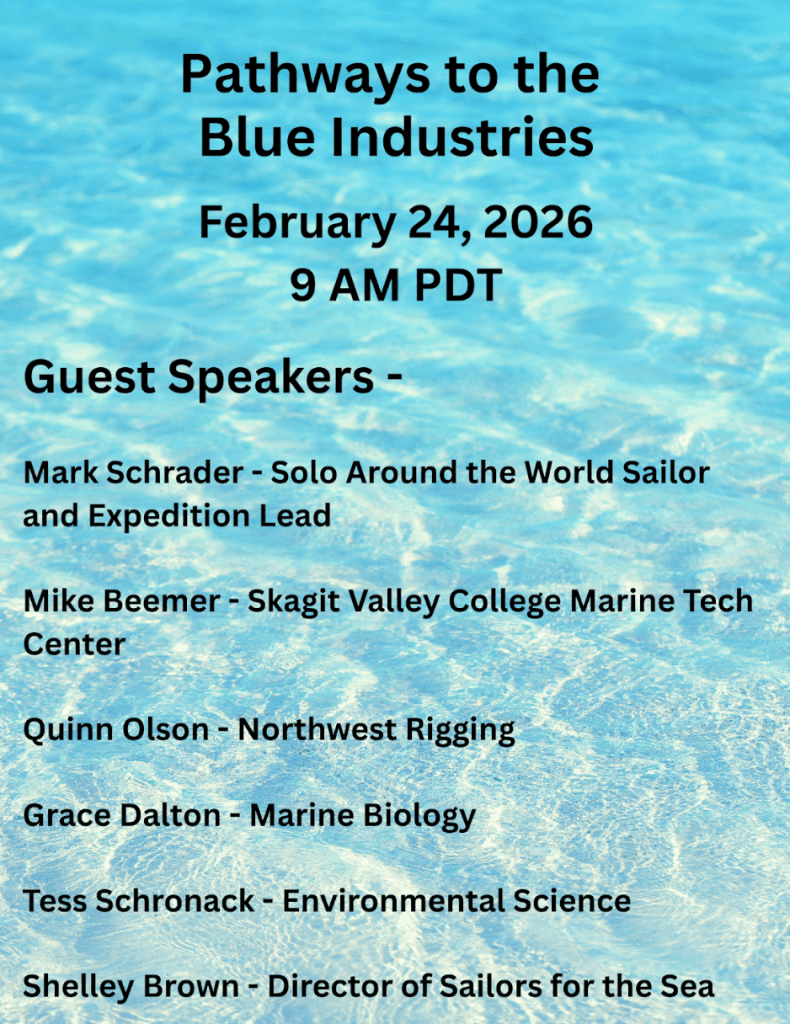
This online classroom from the Around the Americas Expedition is designed to open doors into the growing world of blue industries. ovate with our ocean.Here you’ll discover how people around the world work with and for the ocean: scientists, sailors, engineers, innovators, problem-solvers, and protectors. This classroom helps you find the path that fits you and shows how you can make waves in the blue industries.
Guest speakers:
Mark Schrader – Captain Mark Schrader was born in Nebraska. He had never seen the ocean until he was a teenager when his family moved to California. He made a life in Washington State on a farm and became a small business owner. He has completed two single-handed circumnavigations of the world. He also successfully skippered the first Around the Americas circumnavigation for science and education in 2009/10 and now the 2025/26 Expedition.
Mike Beemer- Michael Beemer is the department chair for the Marine Technology Center. He will be discussing career options and our program offerings related to repair & maintenance of boats, & career options for working on boats as onboard engineers.
Quinn Olson – Quinn Olson, Owner and Lead Rigger Northwest Rigging will discuss career pathways in the sailing industry, where to find them and how to follow them.
Shelley Brown – Shelley Brown, Director of Sailors for the Sea Powered by Oceana will be discussing her career path from studying marine microbes to educating and activating people to protect our oceans and waterways.
Tess Schornack is an undergraduate at Western Washington University, is pursuing an Environmental Science Degree with a Marine Emphasis and interns as the voyage’s social media and education outreach coordinator. She will discuss her journey of inspiring the next ocean stewards and what led her to join this expedition.
Grace Dalton is a marine biology undergraduate at the University of Victoria, a former research assistant intern with BC Whales, and a varsity sailing race team member. Grace interns as the lead scientist aboard this expedition. She will outline her pathway to becoming a marine biologist and ocean advocate.
The Around the Americas Expedition is a 14-month voyage, that just launched in May. They will circumnavigate North and South America aboard the 48-foot sailboat, One Ocean. The mission focuses on scientific research, education, and community outreach to raise awareness about ocean health. Building on Captain Mark Schrader’s original 2009–2010 journey, the expedition will compare oceanic changes over the past 15 years.

Around the Americas Expedition would like to invite you to this exciting class! We are joined by the Bermuda Underwater Exploration Institute’s Program Coordinator, Hannah Horsfield. Hannah earned her Bachelor of Science in Environmental Geography from Cardiff University. Join Hannah as she discusses important environmental issues, such as marine plastic pollution.
The Around the Americas Expedition is a 14-month voyage, that just launched in May. They will circumnavigate North and South America aboard the 48-foot sailboat, One Ocean. The mission focuses on scientific research, education, and community outreach to raise awareness about ocean health. Building on Captain Mark Schrader’s original 2009–2010 journey, the expedition will compare oceanic changes over the past 15 years.
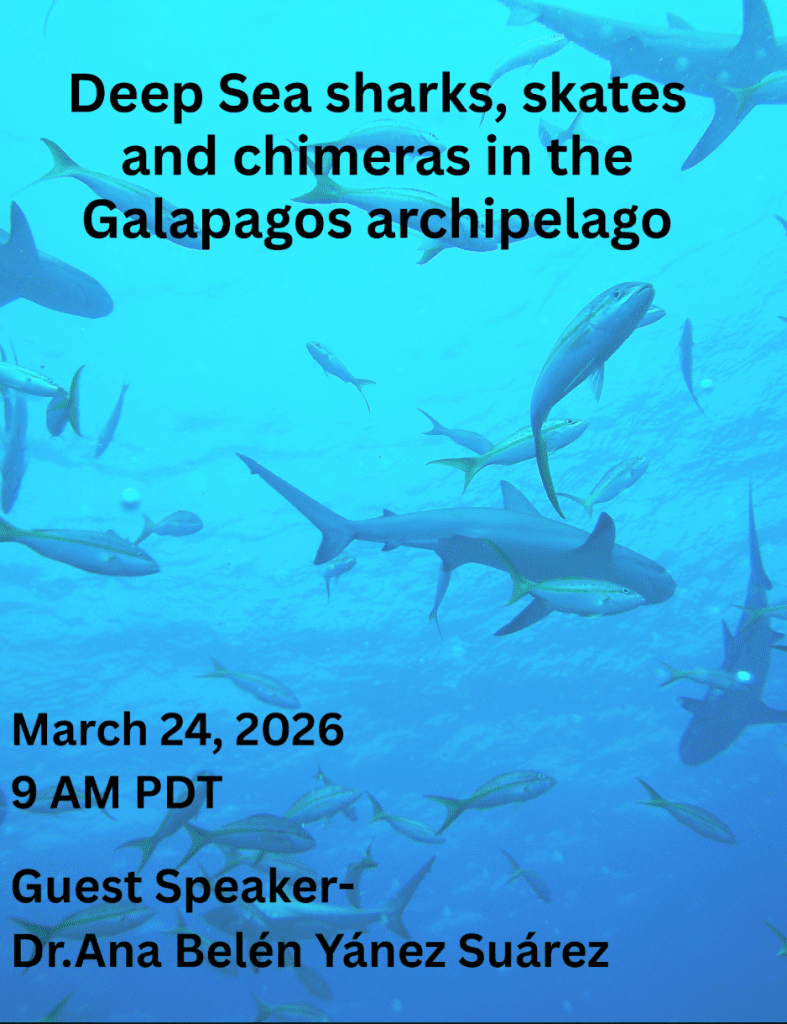
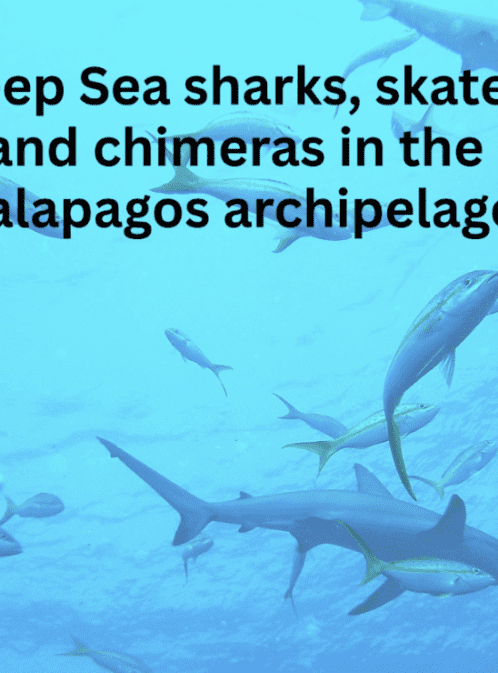
Please join the Around the Americas Expedition alongside Dr. Ana Belén Yánez Suárez a marine biologist, National Geographic Explorer, Conservation Leadership Programme Alumna, and PhD candidate at Memorial University of Newfoundland as she dives into New records of deep sea sharks, skates and chimeras in the Galapagos archipelago.
The Around the Americas Expedition is a 14-month voyage, that just launched in May. They will circumnavigate North and South America aboard the 48-foot sailboat, One Ocean. The mission focuses on scientific research, education, and community outreach to raise awareness about ocean health. Building on Captain Mark Schrader’s original 2009–2010 journey, the expedition will compare oceanic changes over the past 15 years.
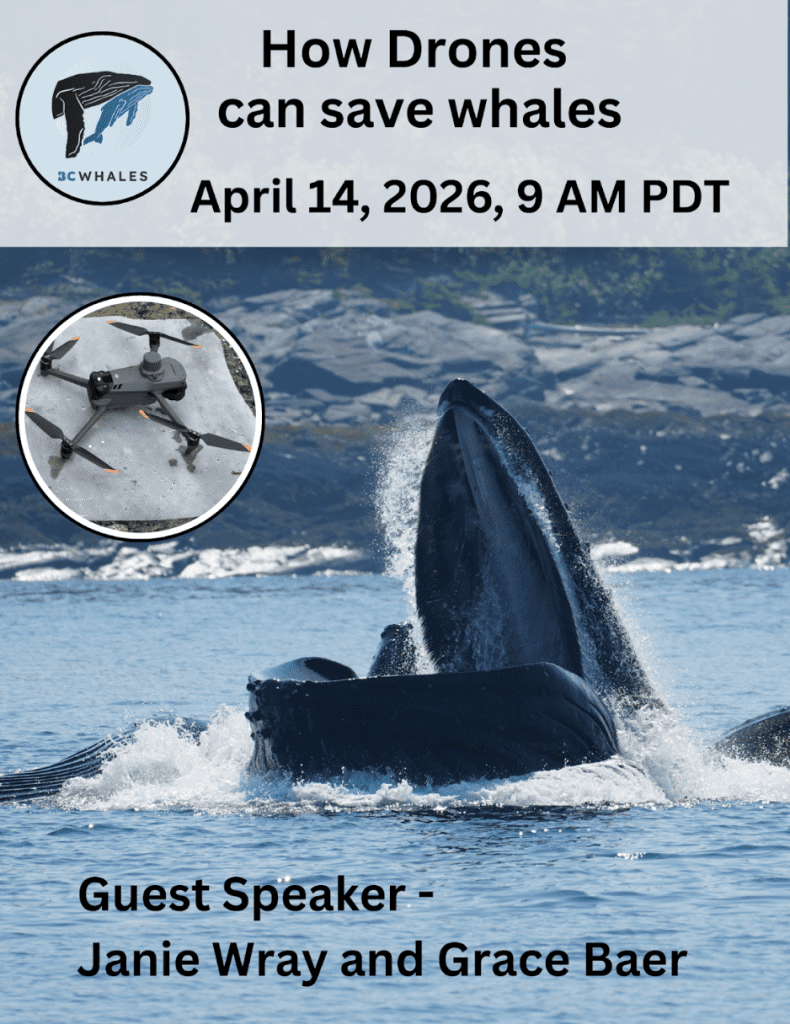
Please join the Around the Americas Expedition and our special guests from BC Whales—Janie Wray, CEO and lead researcher, and Grace Baer, biologist, conservationist, and research/project manager—as we learn how drones are being used to study and save whales. From measuring their bodies, understanding threats like entanglement and ship-strike, and collecting their snot: drones are helping us to do it all!
The Around the Americas Expedition is a 14-month voyage, that just launched in May. They will circumnavigate North and South America aboard the 48-foot sailboat, One Ocean. The mission focuses on scientific research, education, and community outreach to raise awareness about ocean health. Building on Captain Mark Schrader’s original 2009–2010 journey, the expedition will compare oceanic changes over the past 15 years.
Please join the Around the Americas Expedition alongside Dr. Ana Belén Yánez Suárez a marine biologist, National Geographic Explorer, Conservation Leadership Programme Alumna, and PhD candidate at Memorial University of Newfoundland as she dives into New records of deep sea sharks, skates and chimeras in the Galapagos archipelago.
The Around the Americas Expedition is a 14-month voyage, that just launched in May. They will circumnavigate North and South America aboard the 48-foot sailboat, One Ocean. The mission focuses on scientific research, education, and community outreach to raise awareness about ocean health. Building on Captain Mark Schrader’s original 2009–2010 journey, the expedition will compare oceanic changes over the past 15 years.
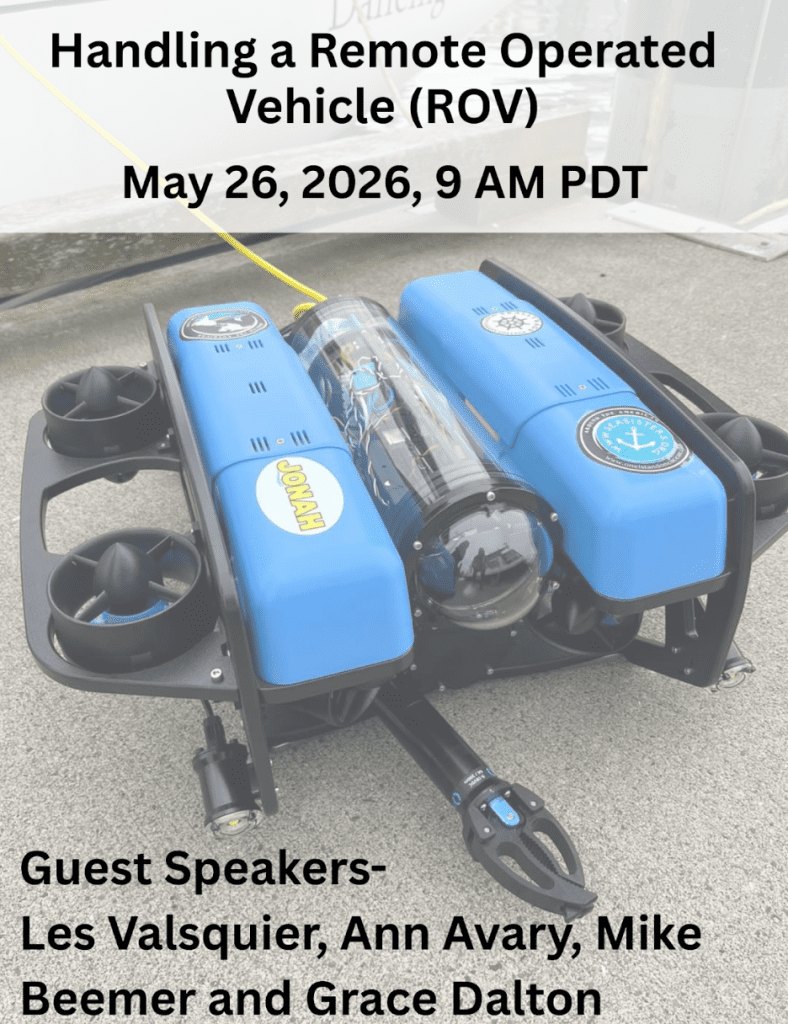
Join the team from the Around the Americas Expedition with guests Ann Avary, Director for the NW Center of Excellence for Marine Manufacturing & Technology and Les Valsquier the ATA’s Director of Technology, as they work their Remote Operated Vehicle (ROV) for their pole – to – pole kelp study. A ROV is vital in exploring kelp forests up close, capturing video and data from places humans can’t easily reach.
The Around the Americas Expedition is a 14-month voyage, that just launched in May. They will circumnavigate North and South America aboard the 48-foot sailboat, One Ocean. The mission focuses on scientific research, education, and community outreach to raise awareness about ocean health. Building on Captain Mark Schrader’s original 2009–2010 journey, the expedition will compare oceanic changes over the past 15 years.

Join the 2025/26 Around the Americas Expedition team for an inspiring classroom experience as they “close the loop” on their extraordinary journey around North and South America.
After thousands of miles at sea, months of gathering ocean data, meeting coastal communities, and witnessing the beauty and challenges of our marine world, the crew is returning with stories that can spark a new generation of ocean stewards.
In this special session, the team will share their reflections on the expedition’s highs and lows, the scientific discoveries that surprised them, and the real-world impacts they’ve seen from climate change, and shifting marine ecosystems. Students will hear firsthand what it feels like to navigate powerful currents, collaborate with researchers across the hemisphere, and live each day with the ocean as their constant companion.
Most importantly, the crew will highlight the meaningful actions young people can take right now—small steps that collectively create big change for our planet’s future. From field science to citizen initiatives, from coastal care to creative advocacy, they’ll offer concrete ways for students to use their voices, curiosity, and passion to protect our shared ocean.
This is more than a recap of a voyage—it’s an invitation to join a movement.
Welcome aboard, future ocean stewards.
The Around the Americas Expedition is a 14-month voyage, that just launched in May. They will circumnavigate North and South America aboard the 48-foot sailboat, One Ocean. The mission focuses on scientific research, education, and community outreach to raise awareness about ocean health. Building on Captain Mark Schrader’s original 2009–2010 journey, the expedition will compare oceanic changes over the past 15 years.
2025 Lessons
The Around the Americas Expedition is a 14-month voyage, that just launched in May. They will circumnavigate North and South America aboard the 48-foot sailboat, One Ocean.
The mission focuses on scientific research, education, and community outreach to raise awareness about ocean health. Building on Captain Mark Schrader’s original 2009–2010 journey, the expedition will compare oceanic changes over the past 15 years.
One of the key projects involves researching kelp forests along the coastlines of North and South America, documenting their health and dynamics. Collaborators include the University of Victoria, UCLA, the Woods Hole Oceanographic Institution, and the University of Washington.
Join in with your class for our first live lesson with the team, we’ll meet the crew, explore the sailing vessel and learn all about the expedition ahead!
Join the Around the Americas Expedition team live from the Gulf of Alaska where they will be deploying a Swift Buoy! We’ll learn about the ocean measurements the buoy will be taking and catch up with the team to hear how the expedition has been going since we last caught up with them in British Columbia.
The Surface Wave Instrument Float with Tracking (SWIFT) is a drifter developed by the Applied Physics Lab at the University of Washington. SWIFT drifters are designed to collect measurements of turbulence and other ocean surface properties in a wave-following reference frame. They can be deployed for up to 60 days and have the capability to be deployed in the Arctic and extreme wave conditions.
The Around the Americas Expedition is a 14-month voyage, that just launched in May. They will circumnavigate North and South America aboard the 48-foot sailboat, One Ocean. The mission focuses on scientific research, education, and community outreach to raise awareness about ocean health. Building on Captain Mark Schrader’s original 2009–2010 journey, the expedition will compare oceanic changes over the past 15 years.
One of the key projects involves researching kelp forests along the coastlines of North and South America, documenting their health and dynamics.
Around the Americas Research and Education Sailing Expedition will explore the impacts of the rising tides and a warmer world with special guest, Cameron Lee, Associate Professor from Kent State University.
The crew from sailing vessel One Ocean will talk with Cameron Lee regarding climate change and the rising sea level. As people continue to flock to coastal cities, the lives and livelihoods of over 3 billion people are now threatened by rising seas. Today, we will discuss the physical and social science behind why sea-level rise is perhaps the single most impactful consequence of our changing climate.
The Around the Americas Expedition is a 14-month voyage, that just launched in May. They will circumnavigate North and South America aboard the 48-foot sailboat, One Ocean. The mission focuses on scientific research, education, and community outreach to raise awareness about ocean health. Building on Captain Mark Schrader’s original 2009–2010 journey, the expedition will compare oceanic changes over the past 15 years.
Kelp forests are among Earth’s most dynamic and productive marine ecosystems, created by giant kelp (Macrocystis pyrifera) and bull kelp (Nereocystis luetkeana). They are also integral to the marine carbon cycle, boasting primary production rates comparable to those of tropical rainforests. Beyond their ecological importance, kelp forests hold cultural significance for Indigenous communities along the Pacific coast and contribute to commercial industries and scientific research.
The Around the Americas Expedition is a 14-month voyage, that just launched in May. They will circumnavigate North and South America aboard the 48-foot sailboat, One Ocean. The mission focuses on scientific research, education, and community outreach to raise awareness about ocean health. Building on Captain Mark Schrader’s original 2009–2010 journey, the expedition will compare oceanic changes over the past 15 years.
The more we understand about whales, the better we can advocate for positive measures of protection that are rooted in science. Hydrophones and drone technology to coastal marine and land based surveys. Around the Americas has partnered with BC Whales to conduct comprehensive research on nutritional, acoustic, and social needs of whales.
The Around the Americas Expedition is a 14-month voyage, that just launched in May. They will circumnavigate North and South America aboard the 48-foot sailboat, One Ocean. The mission focuses on scientific research, education, and community outreach to raise awareness about ocean health. Building on Captain Mark Schrader’s original 2009–2010 journey, the expedition will compare oceanic changes over the past 15 years.
Dr. Thomson studies waves and turbulence at the ocean surface, including interactions with sea ice. His work emphasizes field measurements and physical processes and includes the development of instrumentation and autonomous platforms like the MicroSWIFT Buoy Tracker. This buoy provides real-time data on wave conditions, sea surface temperature, and buoy location. These small, GPS- equipped wave buoys are deployed as part of the 2025 Around the Americas expedition to help scientists monitor dynamic coastal and open ocean environments.
The Around the Americas Expedition is a 14-month voyage, that just launched in May. They will circumnavigate North and South America aboard the 48-foot sailboat, One Ocean. The mission focuses on scientific research, education, and community outreach to raise awareness about ocean health. Building on Captain Mark Schrader’s original 2009–2010 journey, the expedition will compare oceanic changes over the past 15 years.
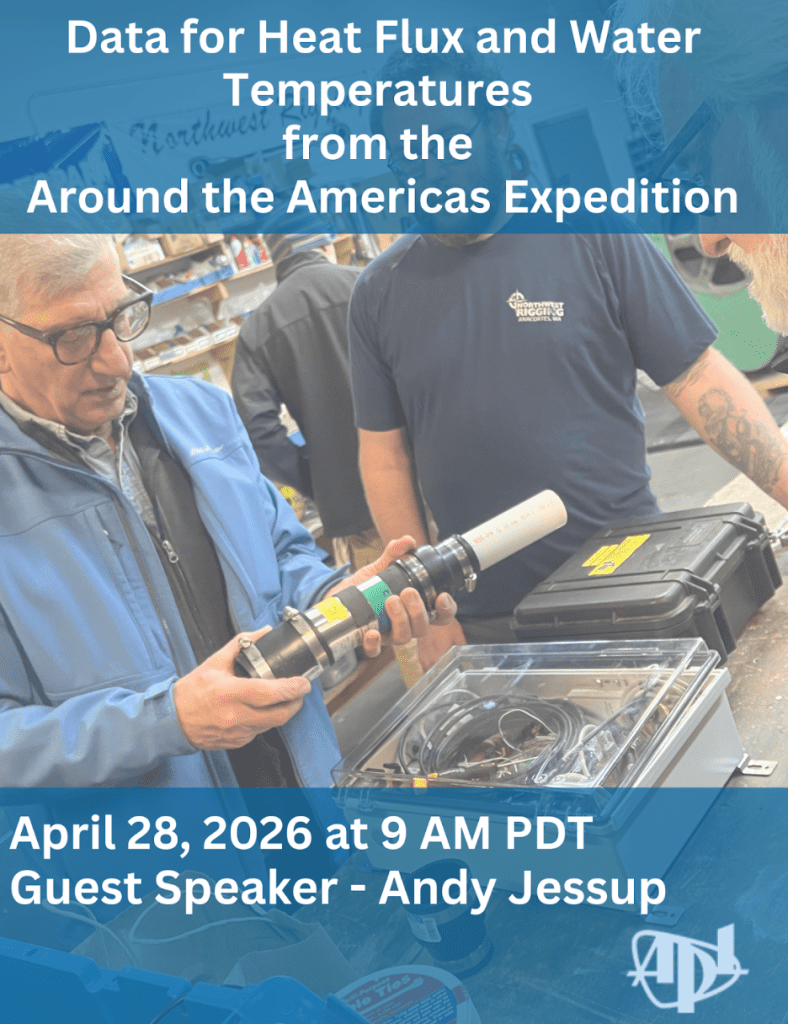
The temperature of the ocean right at the surface is usually a few tenths of a degree Celsius (0.2 to 0.5 °C) cooler than the bulk temperature just a millimeter below the surface. Even though the difference is small, on a global scale the effect is important for estimating the uptake of CO2 by the ocean. This so-called “cool skin effect” is due to the typical conditions of cooling at the surface that results in a net flow of heat from the ocean to the atmosphere. Dr. Andy Jessup will explain and analyze what the crew from sailing vessel One Ocean has collected to date.
The Around the Americas Expedition is a 14-month voyage, that just launched in May. They will circumnavigate North and South America aboard the 48-foot sailboat, One Ocean. The mission focuses on scientific research, education, and community outreach to raise awareness about ocean health. Building on Captain Mark Schrader’s original 2009–2010 journey, the expedition will compare oceanic changes over the past 15 years.
No upcoming events found.
Donate
Help teachers around the world provide world class STEM materials.
Exploring by the Seat of Your Pants is Free for Classrooms Anywhere