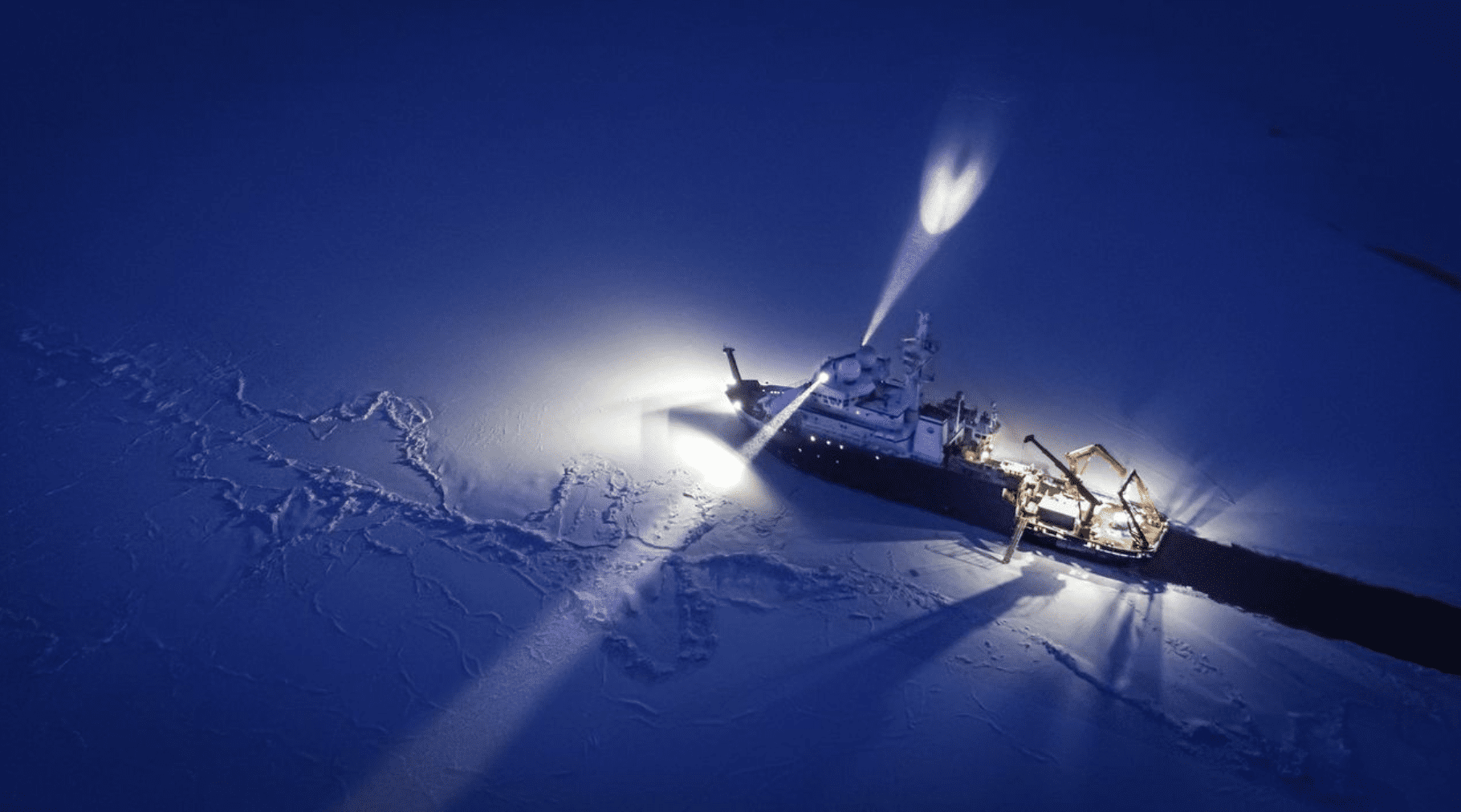
Join us as a team of researchers steams towards their research site in the newly forming sea ice of the Arctic Ocean! In this lesson we’ll learn what landfast ice is and why it’s important, see how waves, storms, and freezing conditions shape the Arctic coast and discover the tools scientists use to measure ice, waves, and seafloor sediment, while meeting some of those scientists as well!
Every fall, the Arctic Ocean begins to freeze. But in recent years, the ice that normally hugs the shoreline — called landfast ice — has been forming later and melting earlier. This means Arctic coasts are being hit by waves for longer each year, causing faster erosion and changing the environment for wildlife and people.
Scientists are heading north on the research vessel Sikuliaq to figure out how ice, waves, and sediment (sand and mud from the seafloor) interact during this “freeze-up” season. The team is using underwater cables, floating sensors, and even amphibious drones to track how storms, wind, and water affect ice formation and coastal change.